Why You Should Test for Radon in New Construction Before You Move In
When I bought my first new home, I assumed everything inside was clean and safe. The builder had used modern materials, the windows were tight, and the whole place smelled like fresh paint and new carpet. It never crossed my mind that the ground beneath the slab could be quietly pushing a radioactive gas into the living room. That assumption cost me a full year of worry and a retrofit that would have been much cheaper to install during the build. That experience taught me something I now tell every buyer: radon in new construction is a real problem, and the best time to solve it is before the concrete is poured.
Why New Homes Are Not Automatically Safe
Many people believe that radon only affects old houses with cracked foundations. In reality, new homes can have radon levels just as high as older ones. The reason has to do with how the house interacts with the ground. Radon comes from the natural decay of uranium in soil and rock. It moves up through the ground as a soil gas, and any opening in the foundation - even a hairline crack or a gap around a pipe - can let it inside. New homes are often built on a gravel base with a vapor barrier, but unless the builder takes specific steps to vent that gas before it enters the living space, the house can still accumulate high levels.
In fact, radon in new construction can sometimes be worse than in older homes because modern building practices make houses tighter. Energy efficiency is great for heating and cooling bills, but it also means less air exchange with the outdoors. When a house is sealed up tight, any radon that gets in stays in. It builds up over time, especially in the lower levels where people spend a lot of their day. I have tested homes in St. Louis that were less than two years old and found readings above 8 picocuries per liter, well above the EPA action level of 4. The owners were shocked. They had never even considered testing.
The Difference Between Passive and Active Systems
When you are building a new home, you have two main options for addressing radon: a passive system or an active system. Both begin with the same basic components, but they work differently once the house is finished.
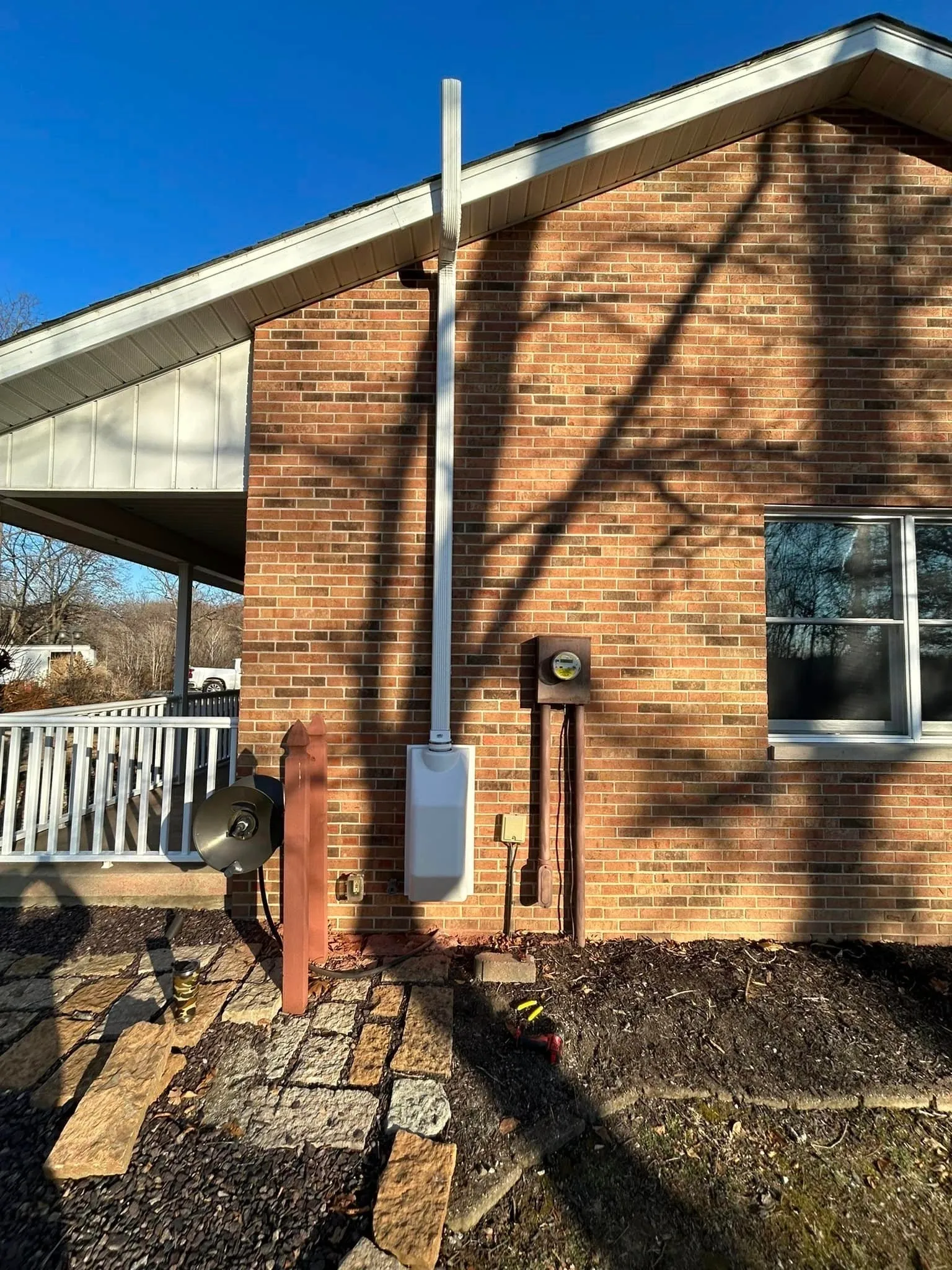
A passive system is essentially a rough-in for later activation. It includes a layer of gravel under the slab, a vapor barrier on top of that, a length of PVC piping that runs from the gravel up through the house and out the roof, and a sealed sump box or T-fitting in the gravel layer. The idea is that soil gas naturally rises through the pipe and exits above the roofline, carried by the stack effect - the natural upward movement of warm air. No fan is involved. Passive systems are required by many building codes now, including those in St. Louis and surrounding counties. They are inexpensive to install during construction, typically adding only a few hundred dollars to the total cost.
But here is the catch: a passive system does not always work. The stack effect can be weak, especially in mild weather or in homes with low rooflines. I have seen passive systems that reduced radon levels from 10 pCi/L down to 6 pCi/L, which is still above the EPA action level. That is better than nothing, but it is not a solution. That is why many experts, including the National Radon Program, recommend upgrading to an active system after the house is built if the post-mitigation test shows elevated levels.
An active system adds a radon fan to the PVC pipe. The fan runs continuously, creating suction under the slab and actively pulling soil gas out of the ground and sending it above the roof. This is called sub-slab depressurization, and it is the most effective method available. An active system can bring radon levels down to near zero, often below 1 pCi/L. The trade-off is that it uses a small amount of electricity and the fan needs to be replaced every 5 to 10 years. But for peace of mind, it is worth it.
What the Building Code Requires
Building codes vary by location. In many parts of the country, including the St. Louis area, the code now requires a passive system in new homes. That means the builder must install the gravel base, the vapor barrier, the PVC piping, and a junction box in the attic or an exterior wall for future fan installation. But the code does not require the builder to test for radon after the house is finished. It also does not require activation of the system. So you can move into a brand new house with a passive system in place and still have high radon levels, simply because nobody tested and the system never had a fan installed.
I have seen this happen more times than I can count. A family buys a new home, the builder shows them the pipe sticking up in the garage, says it is a radon mitigation system, and everyone feels good. Then a year later they decide to test as part of a home inspection for a refinance, and the reading is 7 pCi/L. They call me, and I explain that the passive system is not doing enough. We add a fan, seal some cracks in the slab, and run a post-mitigation test. The number drops to 0.9. The whole process takes a day. But if they had tested during the first month of occupancy, they could have saved a year of breathing elevated radon.
The Value of Early Radon Testing
Radon testing is simple and inexpensive. You can buy a test kit at a hardware store or online for under 20 dollars, or you can hire a professional like Air Sense Environmental to do a more thorough assessment. The test usually sits in the lowest livable level of the house for 48 hours to 90 days, depending on the type. For new construction, I recommend testing during the first month after you move in. That gives the house time to settle into its normal occupancy conditions, but catches any problem before you have lived with it for years.
If the test shows levels above 4 pCi/L, the EPA recommends installing a radon mitigation system. In a new home with a passive rough-in, that usually means adding a fan and making sure the pipe is continuous and sealed. The builder may have left a gap or a joint unglued, which can leak. A professional installer will fix those details, seal any remaining cracks in the slab, and verify the system with a manometer to ensure the fan is pulling the right amount of suction. The manometer is a simple U-tube gauge that shows whether the system is under negative pressure. If the manometer reads zero, the fan is not working or there is a leak. It is a quick check that every homeowner should learn to read.
Why It Matters in St. Louis
St. Louis sits on a geology that is prone to radon. The EPA has mapped much of the region as Zone 1, which means the average indoor radon level is expected to exceed 4 pCi/L. That does not mean every house has a problem, but it does mean the risk is higher than in other parts of the country. If you are building a new home in the St. Louis area, or buying one that was built recently, radon testing should be on your checklist right alongside the home inspection. It is a small step that can protect your family from a known carcinogen.
I have worked with builders who take radon seriously. They install the passive system properly, test the house after completion, and activate the system if needed. Those builders are rare, but they exist. They understand that radon in new construction is not a design flaw - it is a natural phenomenon that requires a deliberate response. They also know that a post-mitigation test gives buyers confidence and protects the builder from future liability. It is a win-win.
Practical Steps for Homeowners
If you are building a new home, here are the steps I recommend:
- Confirm that the builder includes a passive radon system as part of the contract. Ask to see the details: gravel thickness, vapor barrier type, pipe diameter, and location of the junction box.
- Budget for a radon test after you move in. Do this before you finish the basement or install finished flooring over the slab.
- If the test shows levels above 4 pCi/L, hire a professional to activate the system. That means installing a radon fan, sealing any cracks, and verifying the system with a manometer.
- Consider an active system from the start. The extra cost during construction is minimal, and you will never have to wonder if the passive system is working.
- Test again every two years, or after any major renovation that affects the foundation or the HVAC system.
Final Thoughts
Radon in new construction is a topic that does not get enough attention from buyers or builders. We focus on the things we can see: granite countertops, hardwood floors, smart thermostats. But the invisible threat in the basement is the one that can actually make you sick. The good news is that the solution is straightforward and affordable, especially when planned during the build. A properly designed radon mitigation system - active or passive - combined with sealing cracks and a vapor barrier, will keep your indoor air safe for decades. The key is to test early and act on the results. Do not wait until you smell something or until a friend mentions it. Radon is odorless, colorless, and tasteless. You cannot detect it without a test. But you can control it with the right system.